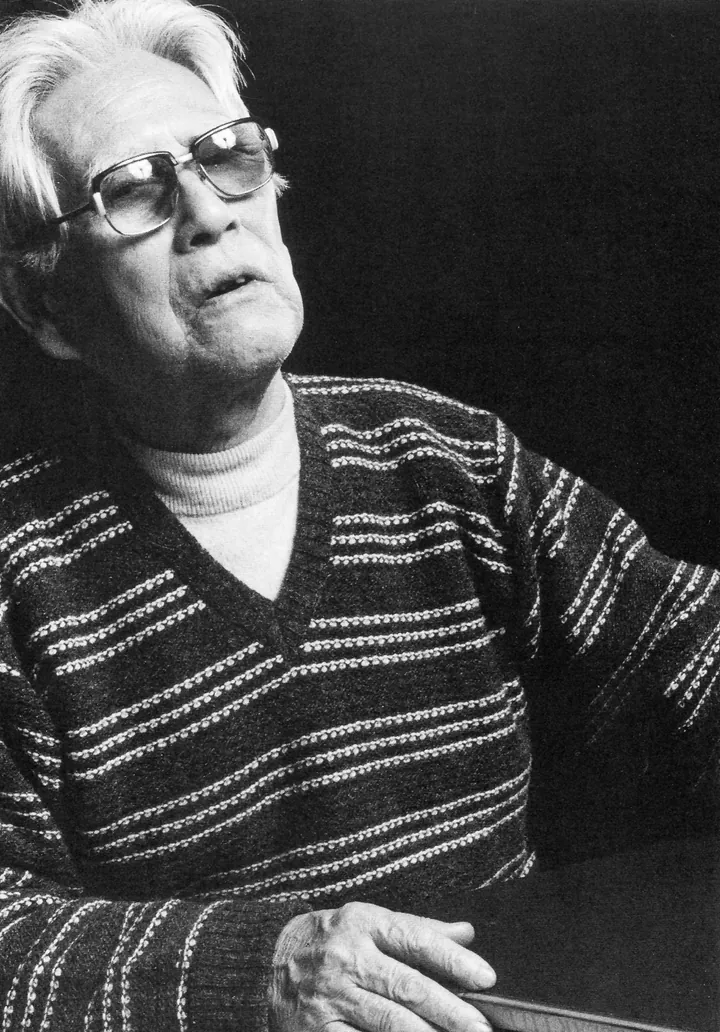
Yoshitoshi Mori森義利
- Dates
- October 31, 1898 (Meiji 31) – May 29, 1992 (Heisei 4), aged 93
- Birthplace
- 24 Honfunachō, Nihonbashi Ward, Tokyo
- Residence
- Nihonbashi, Tokyo (throughout his life)
Refining the techniques of katazome stencil dyeing, he pioneered Kappazuri as a fine art print.
A true son of Edo who lived through the late Meiji, Taishō and Shōwa eras. He studied yūzen design and, having passed one peak in his career by making his name as a textile pattern artist (moyō eshi), he became devoted to Sōetsu Yanagi. He was active as a member of the Moegi-kai, a group centered on Keisuke Serizawa, but after winning second place at the 1st Tokyo International Print Biennale in 1957 (Shōwa 32), he resolved to make a fresh start as a printmaker and began working independently.
He also produced many hand-painted works depicting scenes of shitamachi life. Because their witty, stylish expression vividly portrays the everyday lives of ordinary Edo people of the good old days, these works are valued not only as art but also in academic fields, as records of life in the late Edo, Meiji, Taishō and early Shōwa periods, of which few survive.
He died on May 29, 1992 (Heisei 4). He lived in Nihonbashi, Tokyo, throughout his life.
Many publications have kindly written about Yoshitoshi Mori, but they often omit the following points: that he made his name as a yūzen pattern artist; that he pioneered kappa-ban as a fine art print; that he did not study under Keisuke Serizawa, but was active in the same group centered on him; and that he began printmaking independently after winning second place at the 1st Tokyo International Print Biennale. Please keep this in mind.