Selected Works代表作品
Most of Yoshitoshi Mori’s major works date from around 1958 to the late 1980s. Because he devoted himself to kappa-ban only after he turned sixty, following a career as a dyer, he left an unusually large body of late work for an artist born before the war. In a working life of just over thirty years he produced around 1,000 works, making him a truly prolific artist. Enjoy the dynamic compositions and bold deformation, the powerful lines of the honesen-zuri (骨線摺り) outline printing, and the richly expressive colors.
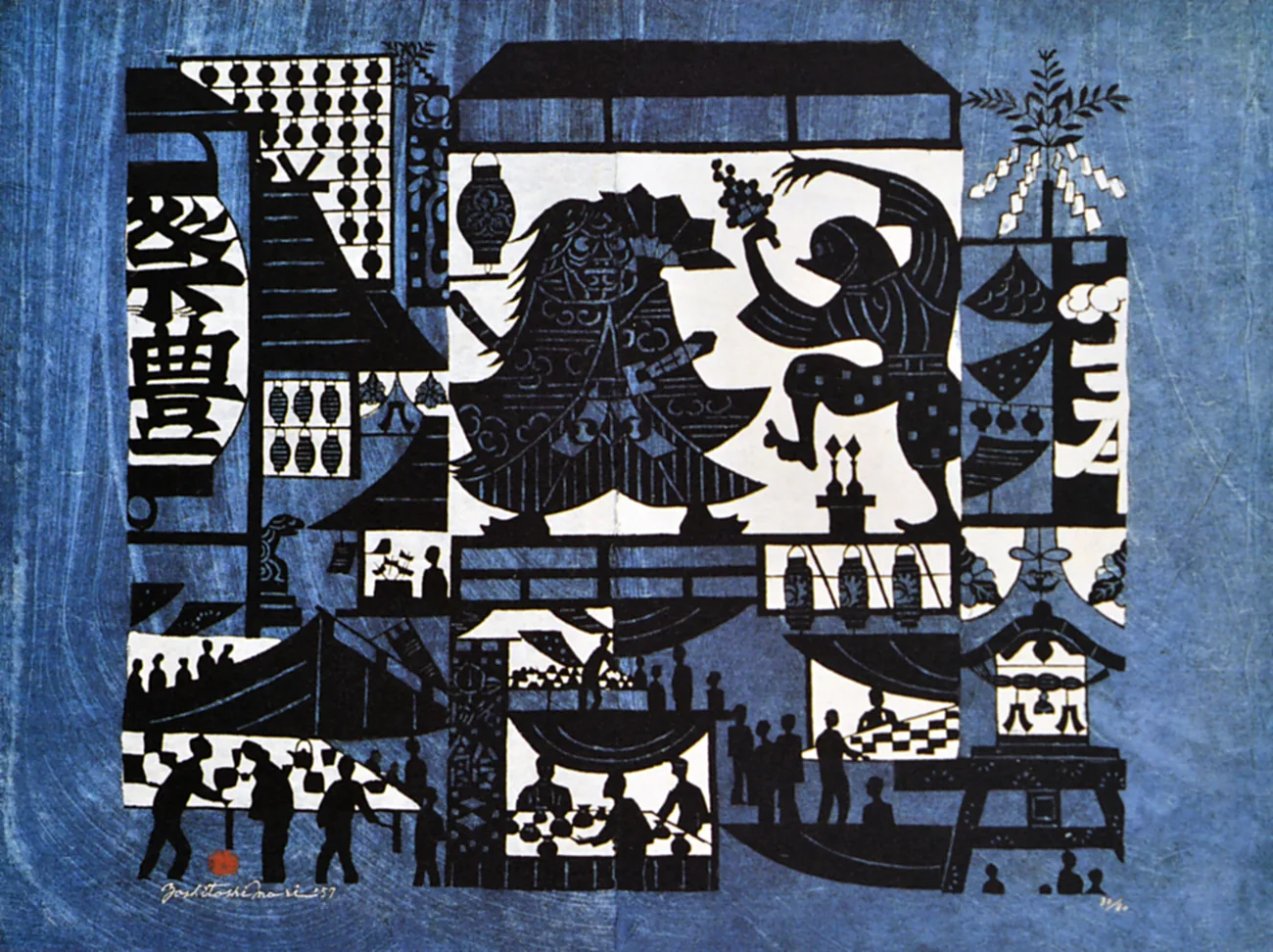
Year-end Market
暮の市|Kure no Ichi
Kappa-ban, 1957
Edition of 30, 90.0 × 120.0 cm
Exhibited at the 1st Tokyo International Print Biennale (第一回東京国際版画ビエンナーレ展)
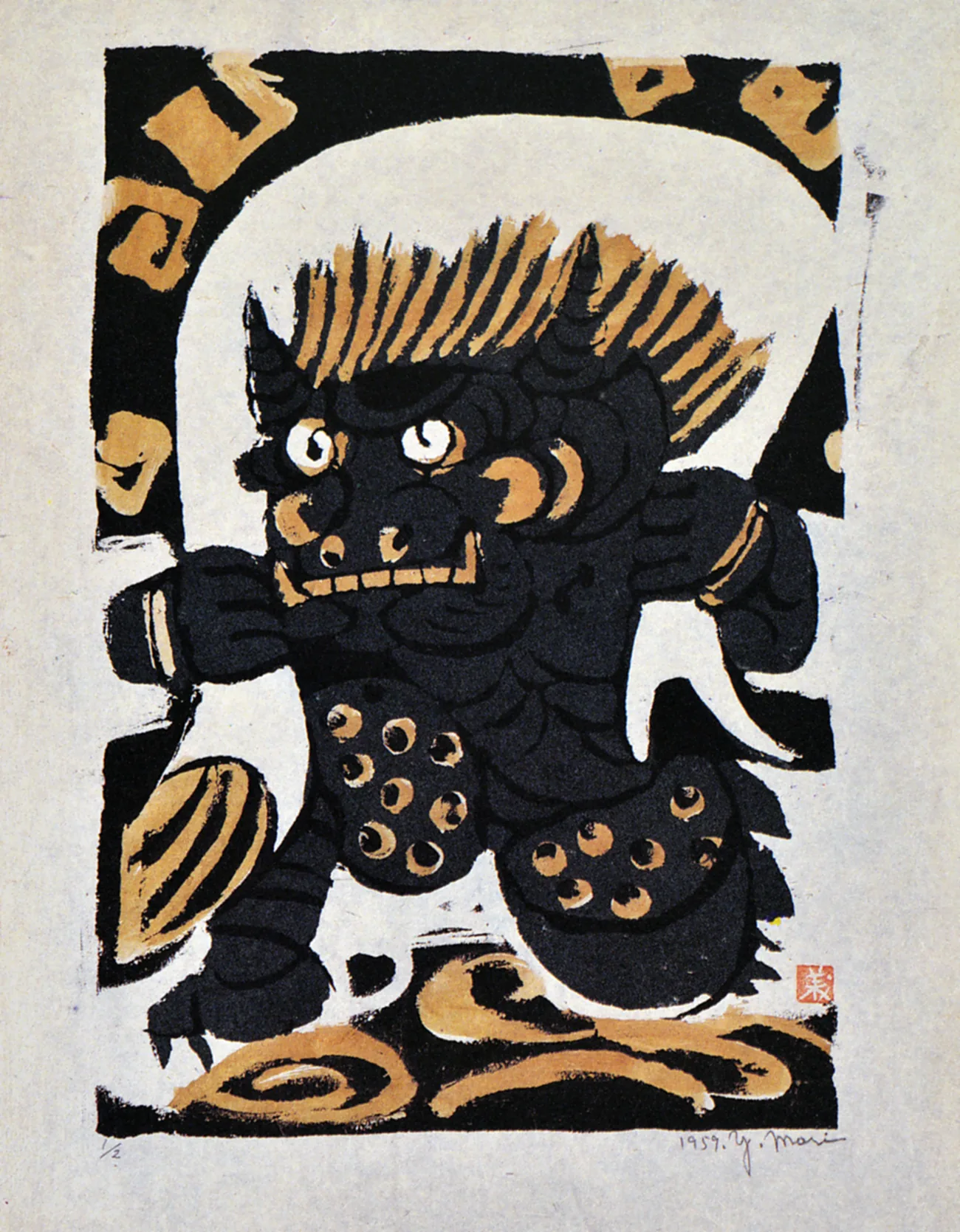
Wind God
風神|Fūjin
Kappa-ban, 1959
Edition of 2, 78.0 × 59.0 cm
In the Vedas (ヴェーダ), the fundamental scriptures of Brahmanism (バラモン教), he is one of three gods, together with the sun god and the moon god (日天、月天), and is a god of honor and blessing. He later became one of the world-protecting deities (護世天) and the guardian of the northwest. In Japan he is shown naked, carrying a bag of wind on his shoulders as he races across the sky.
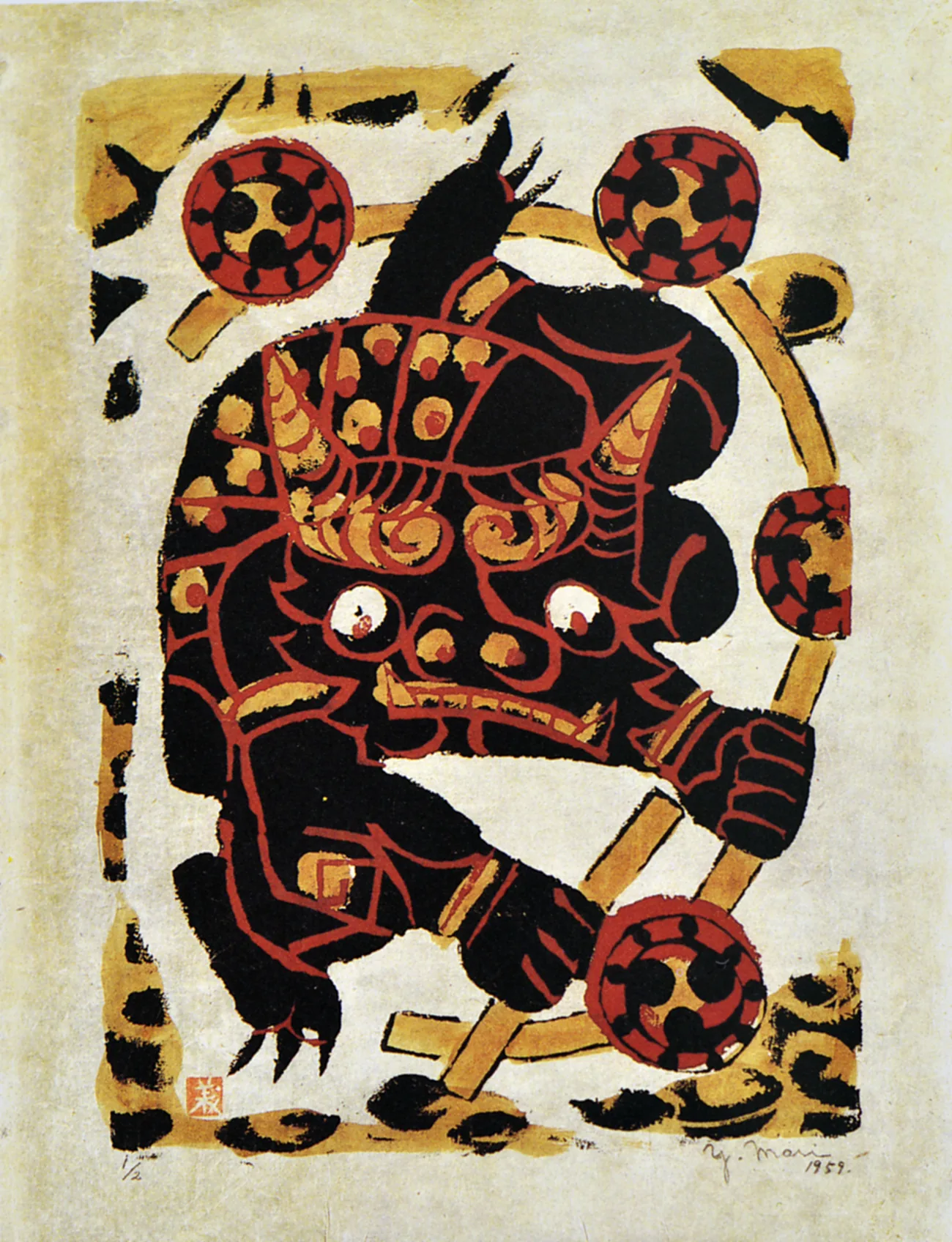
Thunder God
雷神|Raijin
Kappa-ban, 1959
Edition of 2, 78.0 × 59.0 cm
He brings thunder and lightning. Demon-like in appearance, he wears a loincloth of tiger skin, carries a ring of drums on his back and holds drumsticks in his hands.
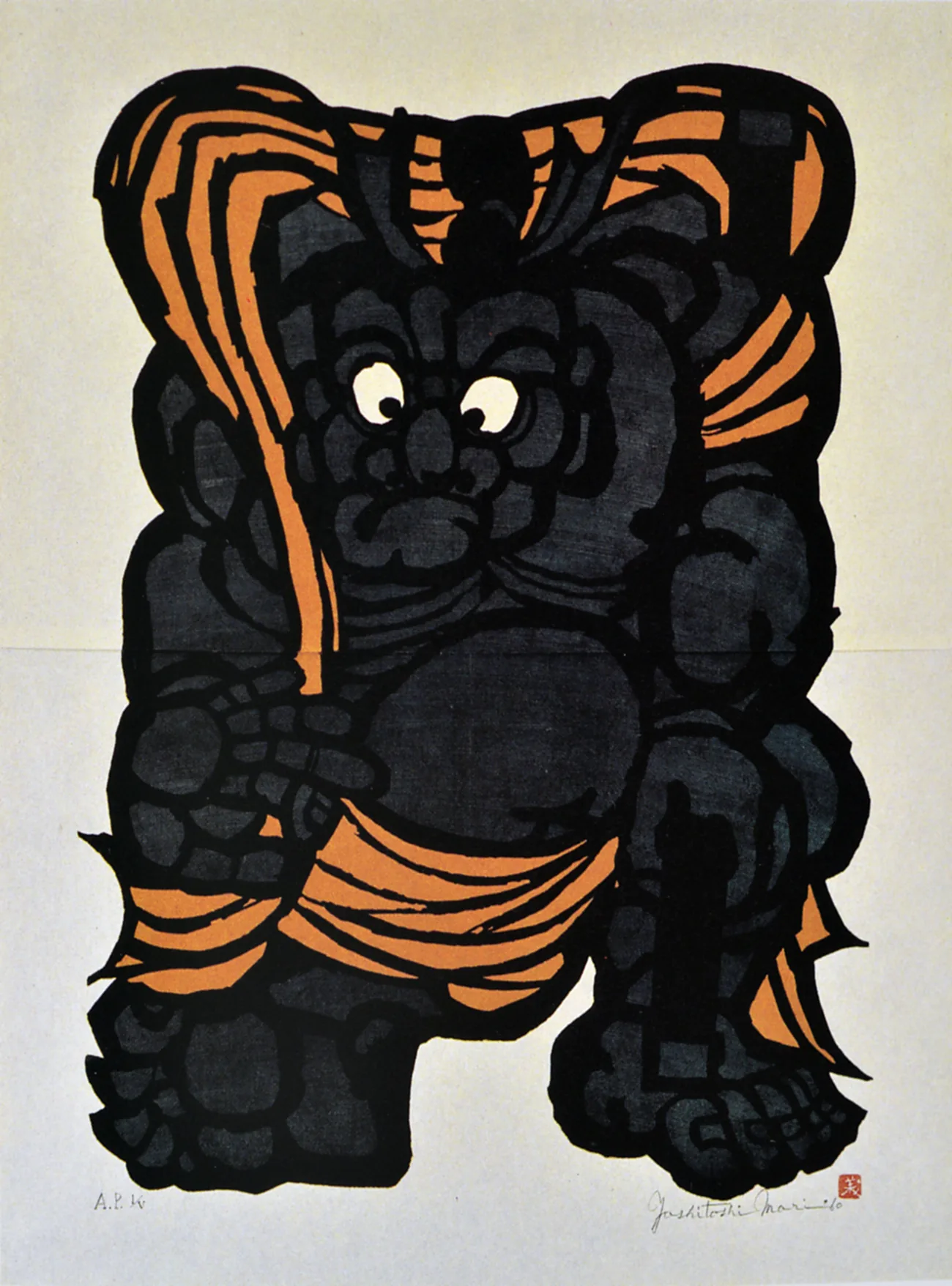
Blue Deva King
青仁王|Ao Niō
Kappa-ban, 1960
Edition of 50, 120.0 × 90.0 cm
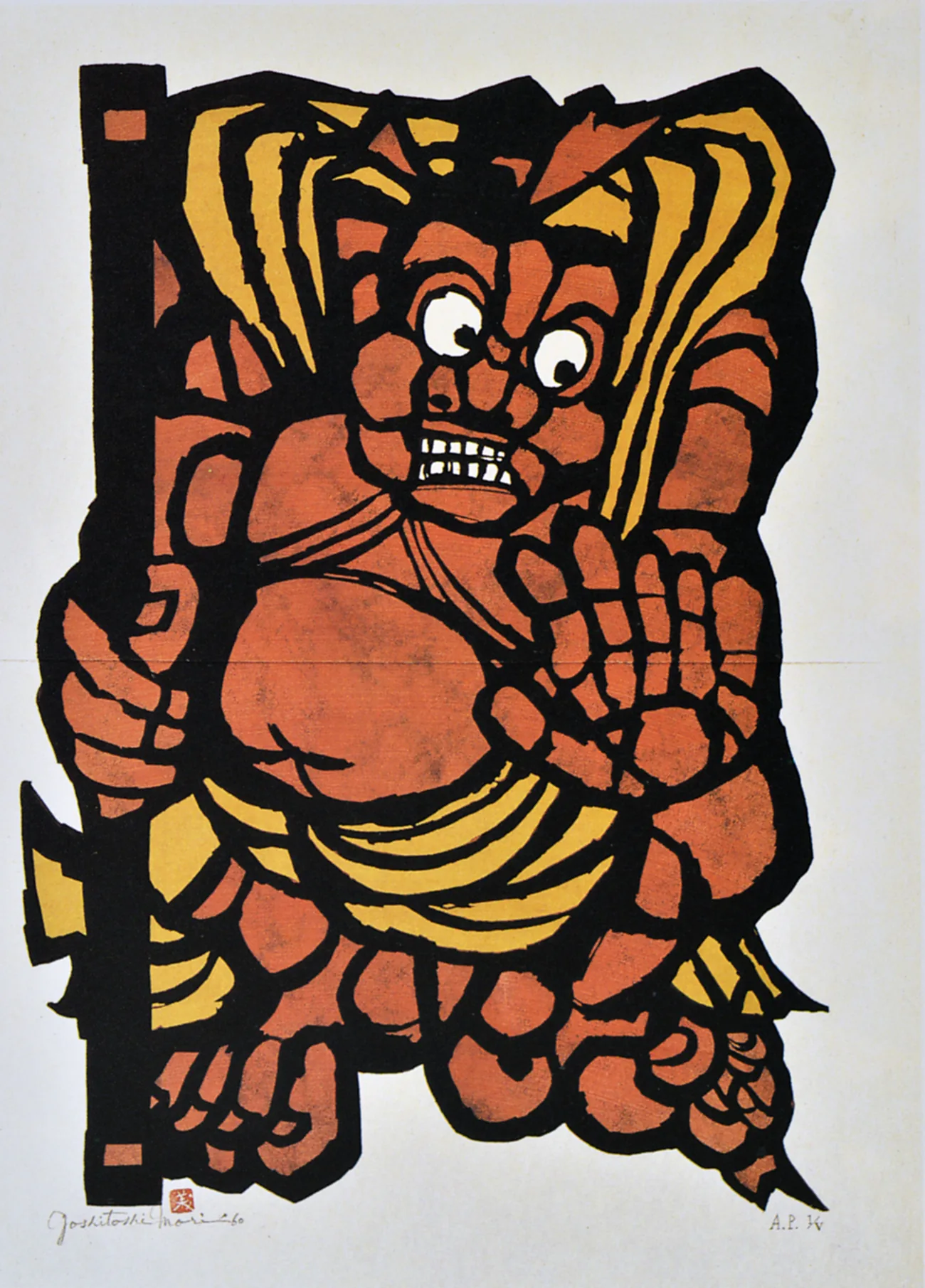
Red Deva King
赤仁王|Aka Niō
Kappa-ban, 1960
Edition of 50, 120.0 × 90.0 cm
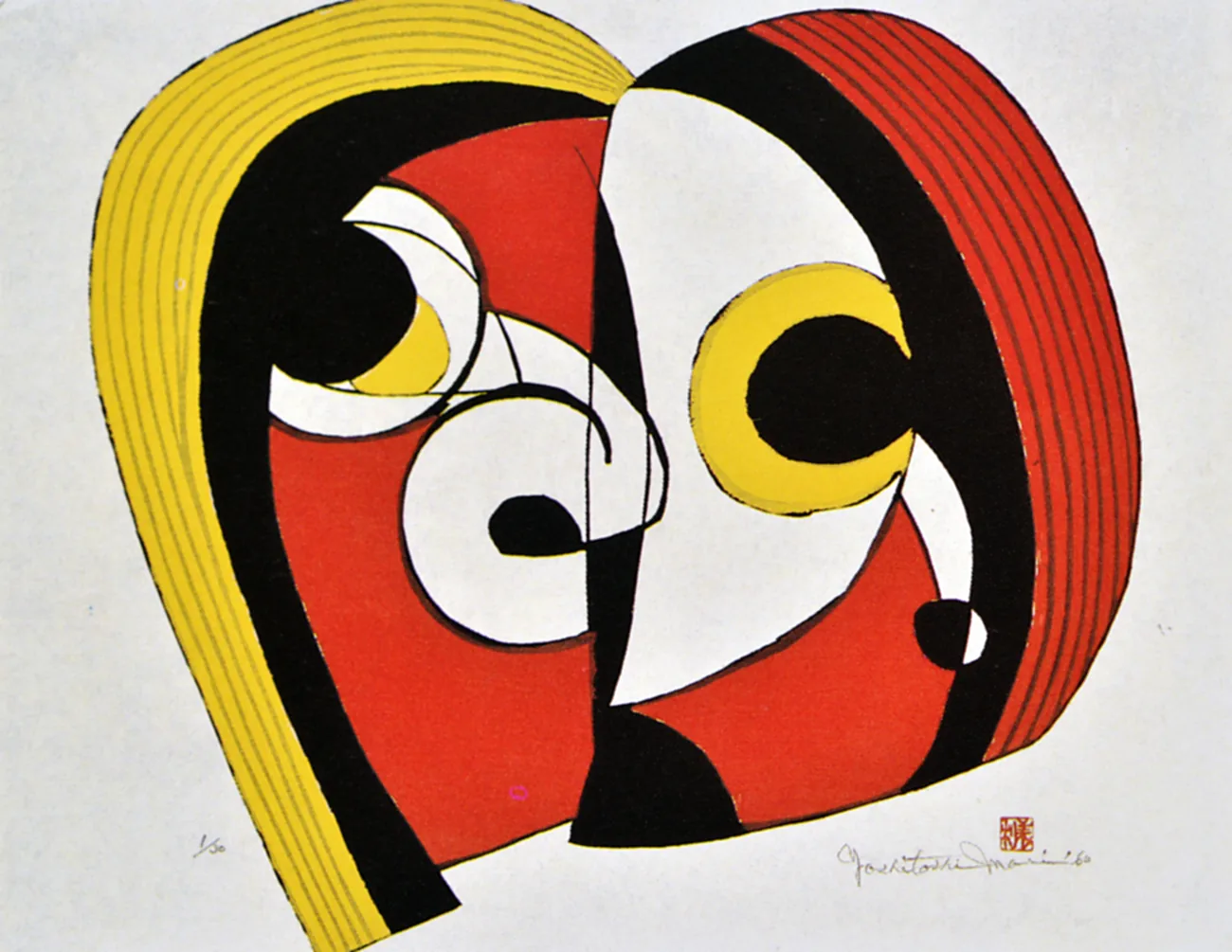
Two Masks
二つの面|Futatsu no Men
Kappa-ban, 1960
Edition of 30, 72.0 × 91.0 cm
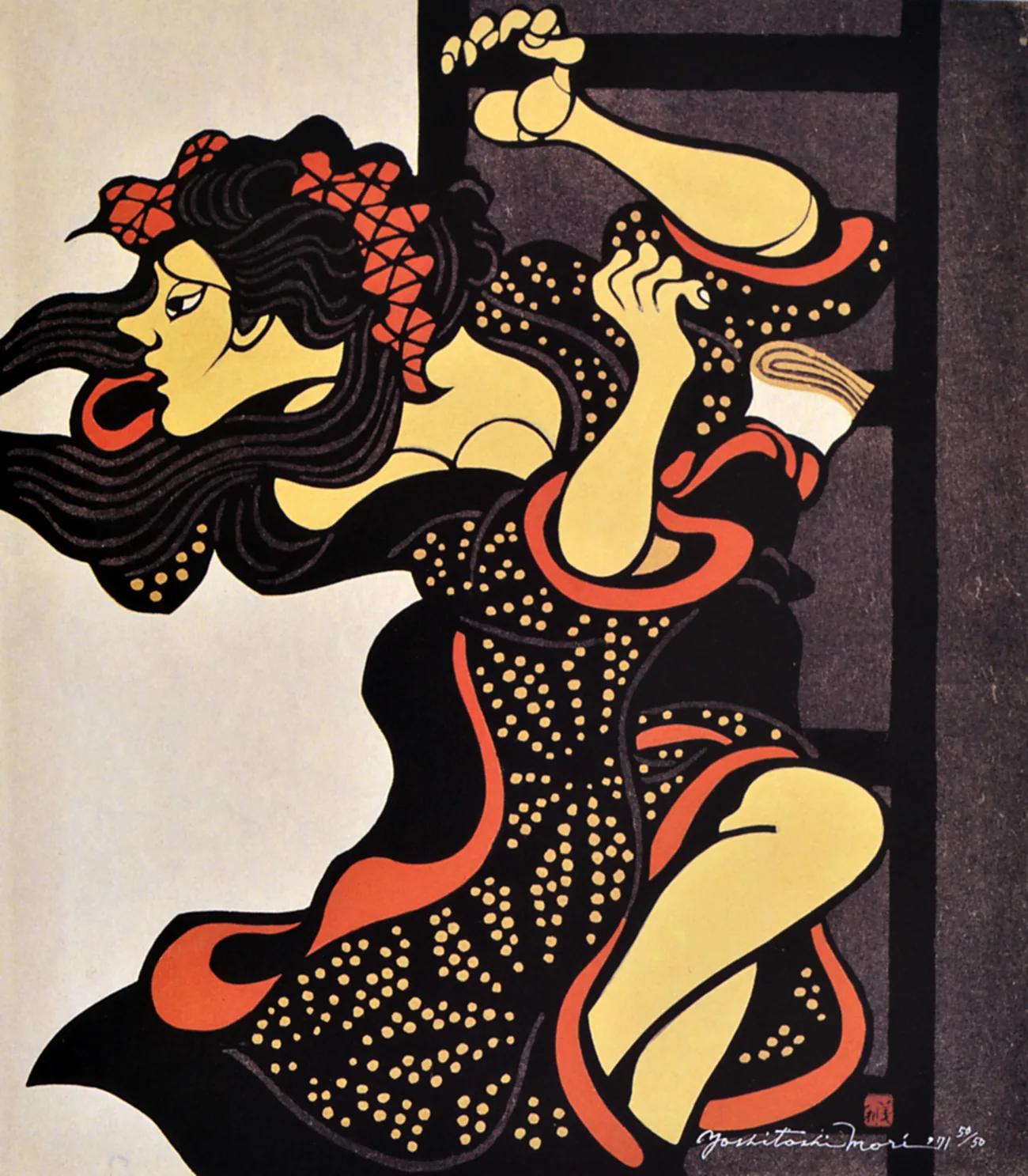
Crazed Oshichi Climbing a Fire Tower
お七|Oshichi
Kappa-ban, 1971
Edition of 50, 70.0 × 60.0 cm
Oshichi was the only daughter of Ichizaemon (八百屋市左衛門), a greengrocer in Komagome, Hongō, Edo (江戸本郷駒込). Burned out of her home by a great fire, she took refuge at her family’s temple (檀那寺), where she fell in love with a young temple page. Overcome by longing, she became convinced that another fire would let her see him again, and set one herself. The incident became the jōruri play commonly called Yagura no Oshichi (「櫓のお七」), and its scene of Oshichi climbing the fire tower in falling snow to beat the drum won great popularity.
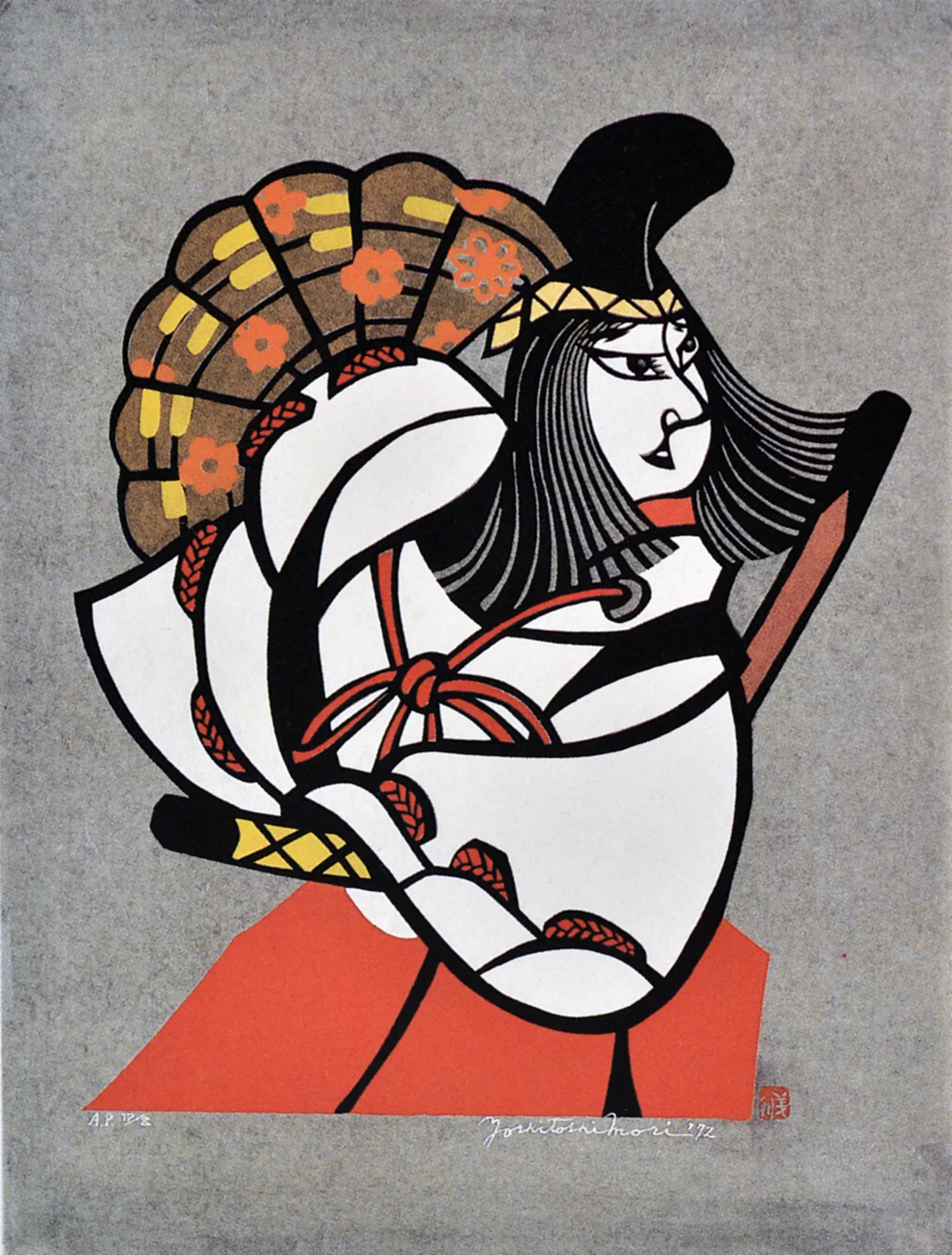
The Dance of Giō
祇王の舞|Giō no Mai
Kappa-ban, 1972
Edition of 50, 70.0 × 52.0 cm
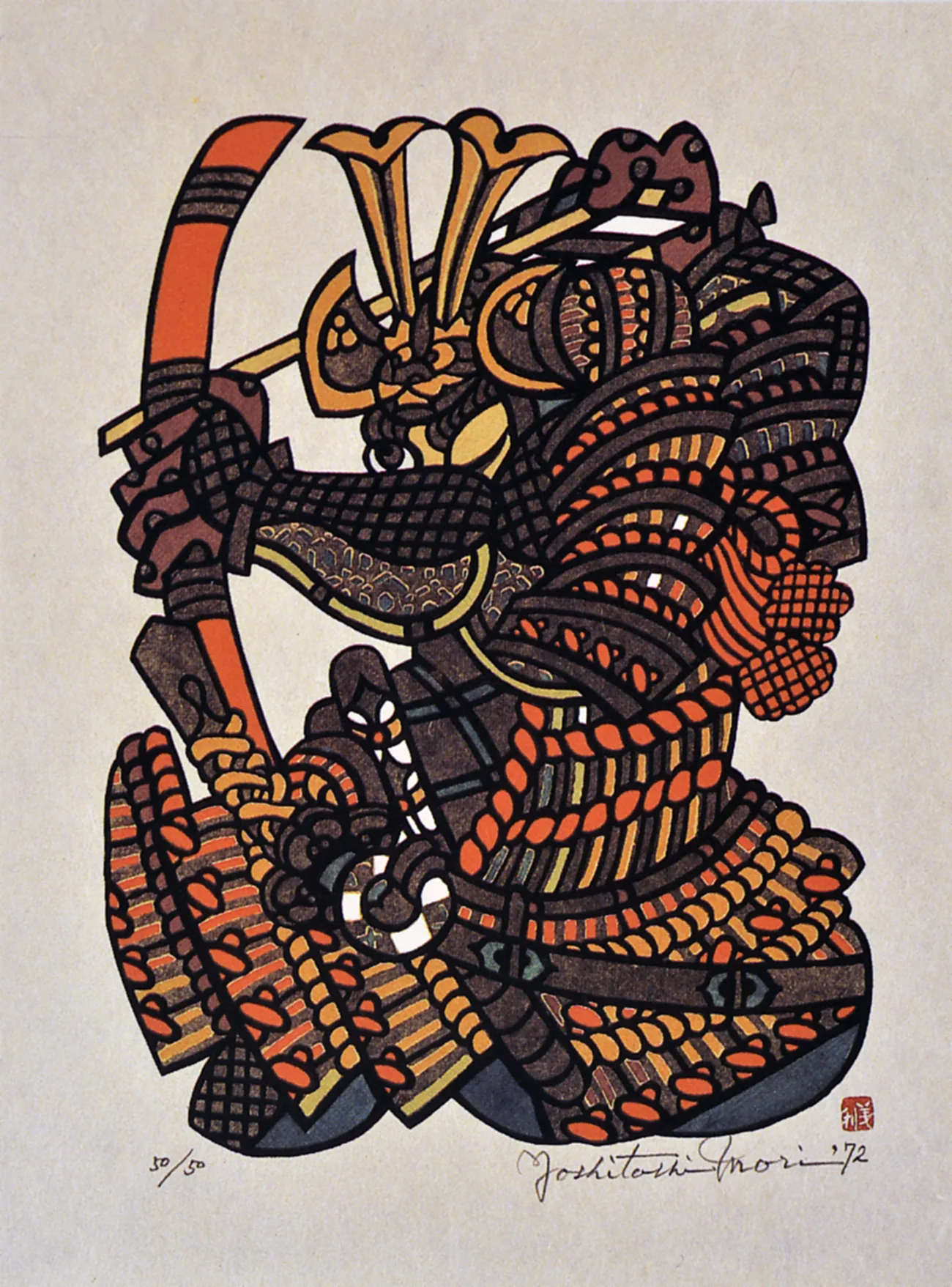
Taira no Kiyomori, Man of Valor
清盛の勇姿|Kiyomori no Yūshi
Kappa-ban, 1972
Edition of 50, 70.0 × 50.0 cm
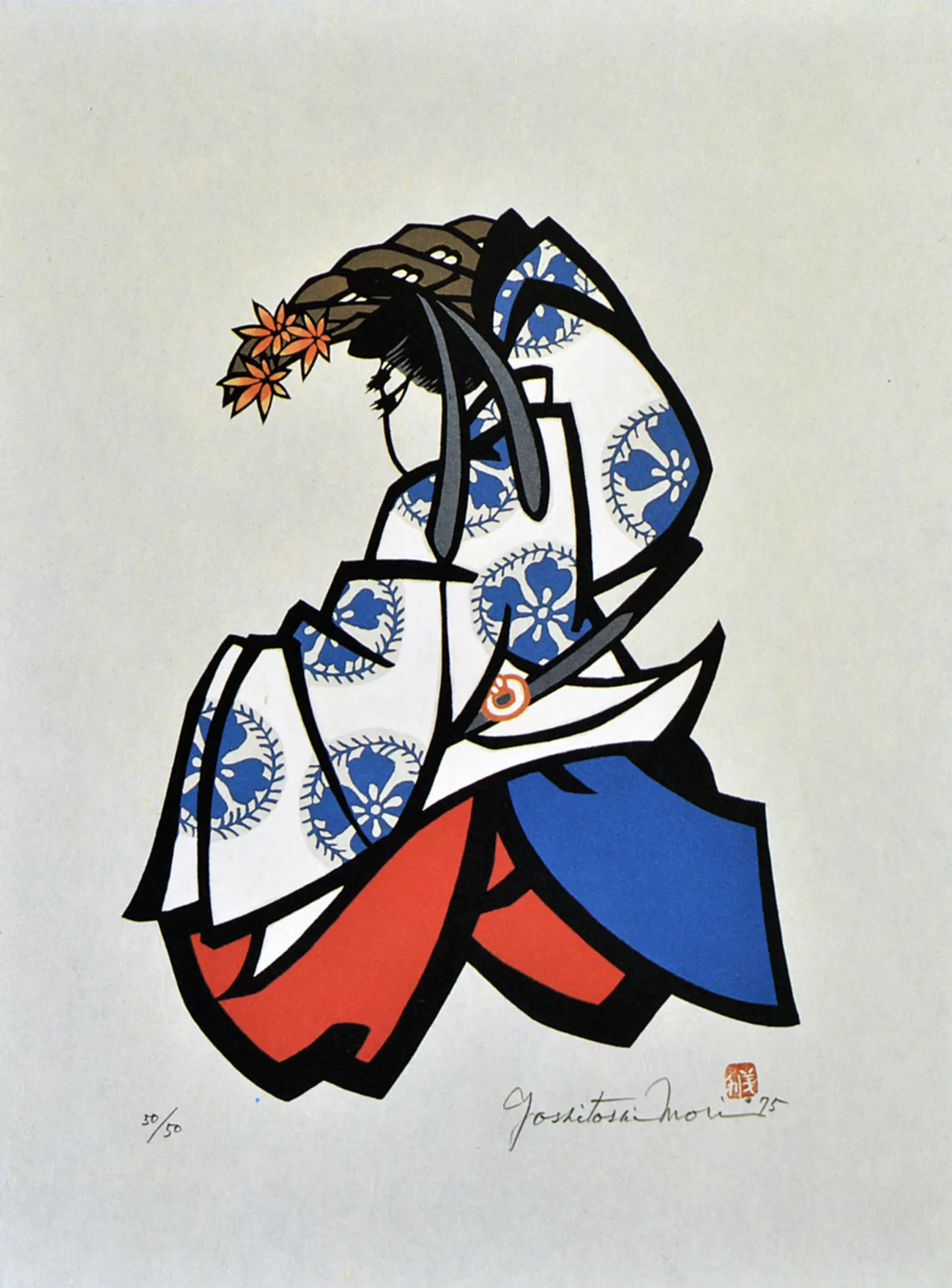
Prince Genji's Dance of Autumn Leaves
もみじ賀の舞|Momijiga no Mai
Kappa-ban, 1975
Edition of 50, 70.0 × 52.0 cm
At a rehearsal performance held for the pregnant Fujitsubo (藤壺), Genji (源氏) dances Seigaiha (青海波) beneath the autumn leaves and wins great praise.
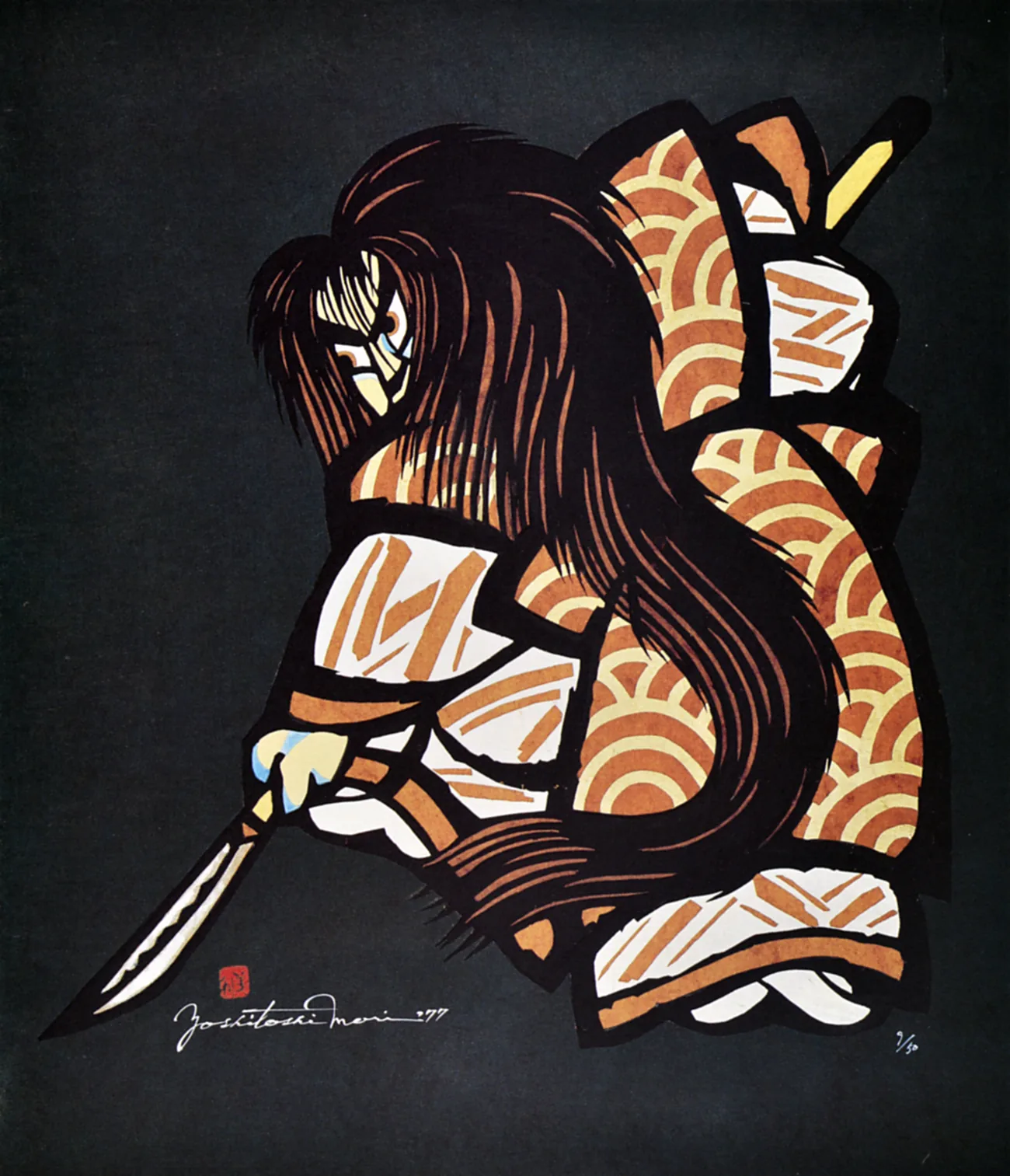
Taira no Tomomori
知盛|Tomomori
Kappa-ban, 1977
Edition of 50, 70.0 × 60.0 cm
From the kabuki dance play Funa Benkei (「船弁慶」). Tomomori (知盛), a son of Taira no Kiyomori (平清盛), was defeated by the Genji at Dannoura (壇ノ浦) and took his own life. He returns as a ghost on the sea at Daimotsu Bay (大物浦), wielding a halberd (長刀) to torment Yoshitsune (義経) and his party.
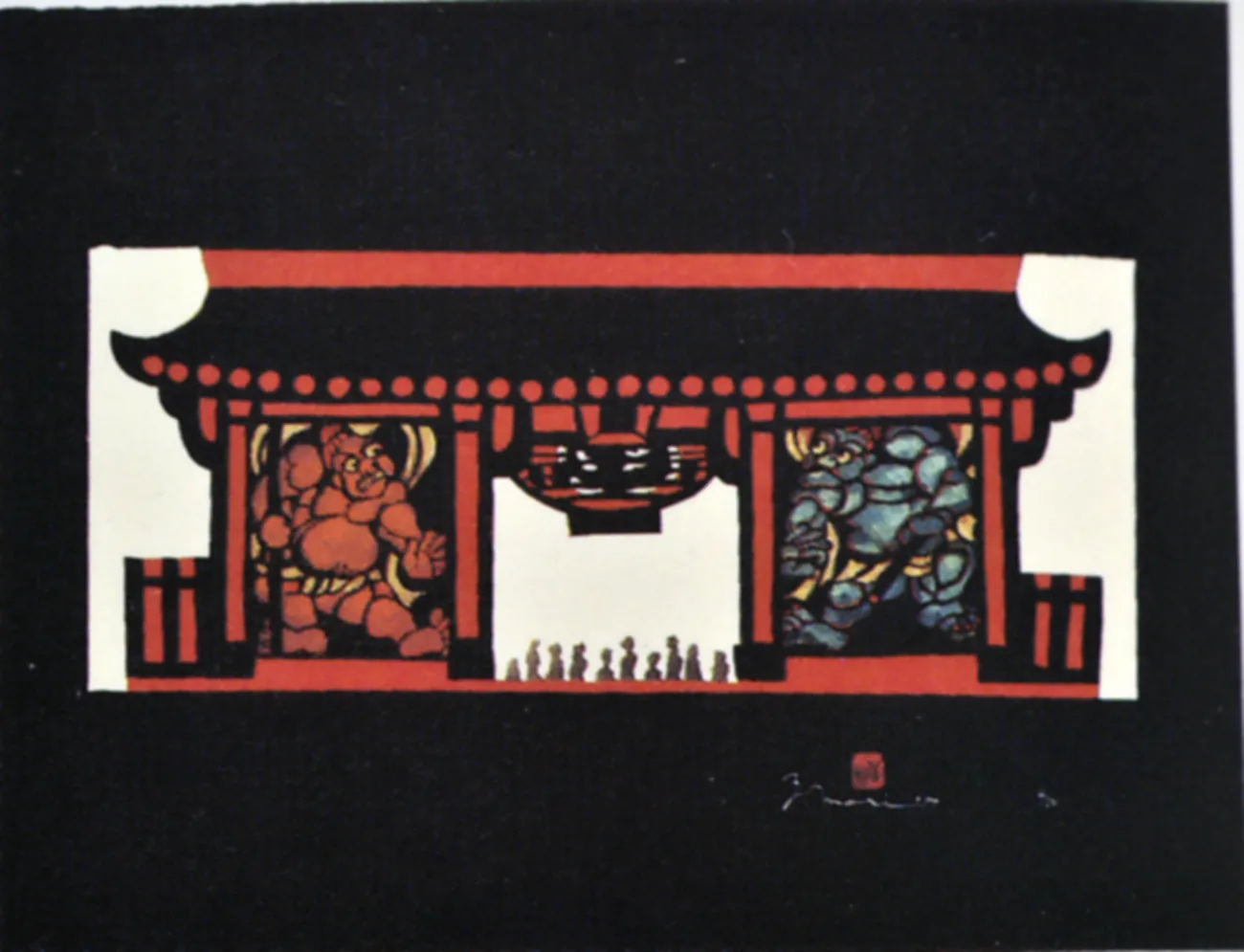
Gate of Deva Kings
仁王門|Niōmon
Kappa-ban, 1977
Edition of 50, 52.0 × 70.0 cm
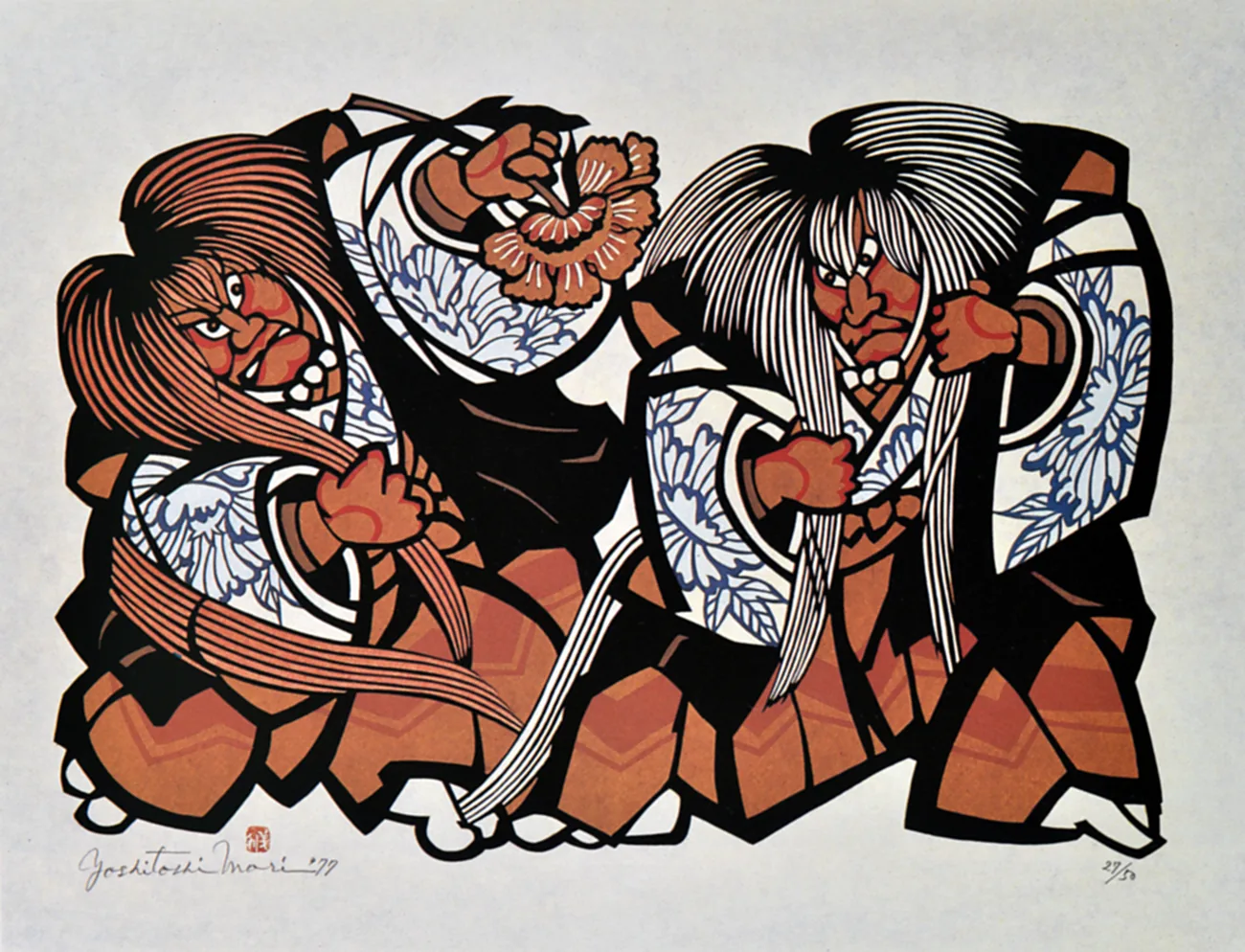
Dance of Two Lions
連獅子|Renjishi
Kappa-ban, 1977
Edition of 50, 72.0 × 91.0 cm
A kabuki dance whose theme is the love between parent and child, drawn from the tale of the lion that throws its cub from a cliff (獅子の子落し). Before a painted pine backdrop (松羽目), two kyōgen performers dance the wild movements of the parent lion and its cub.
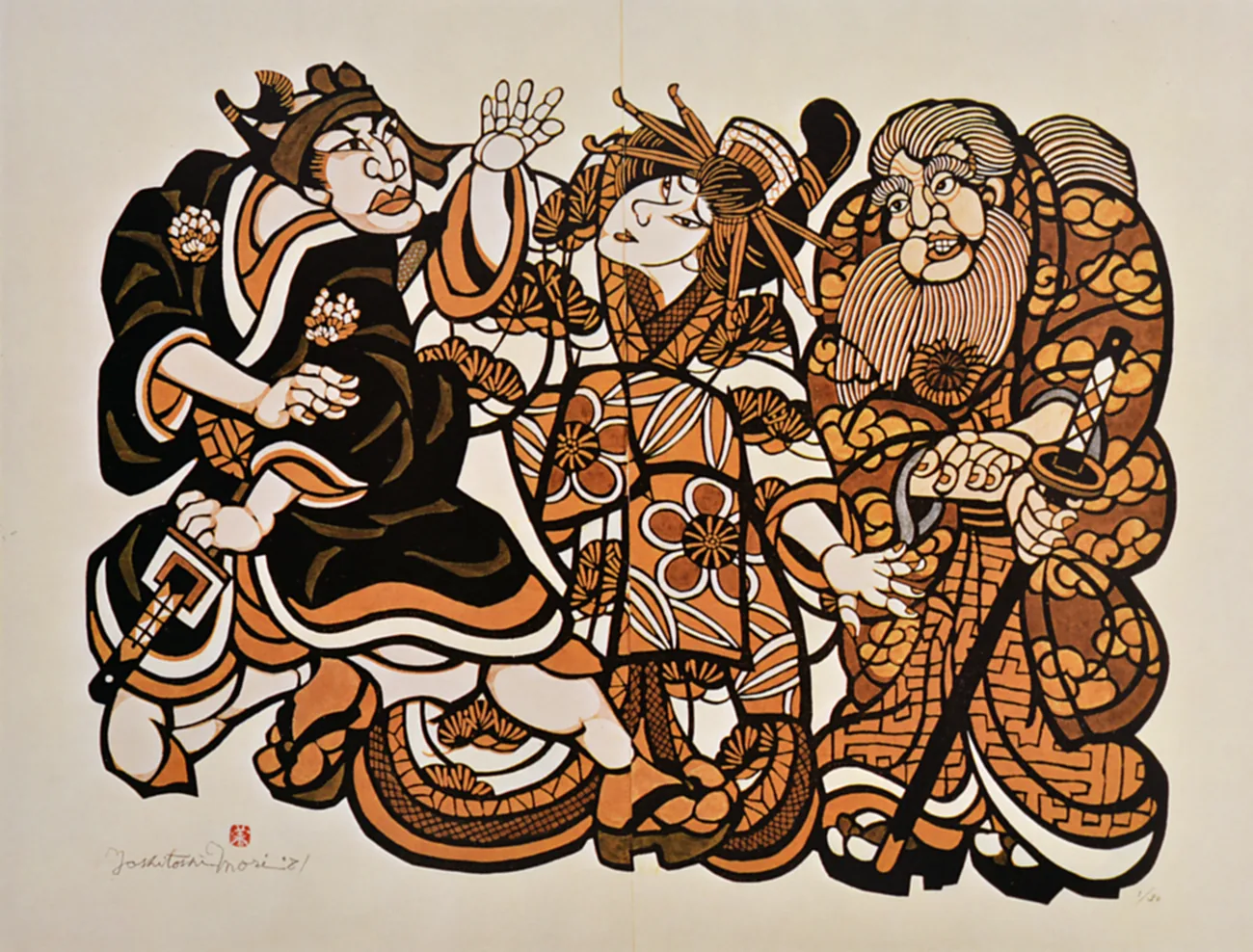
Sukeroku
助六|Sukeroku
Kappa-ban, 1981
Edition of 30, 91.0 × 138.0 cm
From Sukeroku Yukari no Edo Zakura (「助六所縁江戸桜」), one of the Kabuki Jūhachiban (歌舞伎十八番). Hanakawado Sukeroku (花川戸助六), who is in fact Soga Gorō (曾我五郎), frequents the Yoshiwara (吉原) in search of the famous sword Tomokirimaru (友切丸). He picks a quarrel with the bearded Ikyū (意休), who is pursuing Agemaki (揚巻) of the Miuraya (三浦屋), and at last takes the sword back from him.
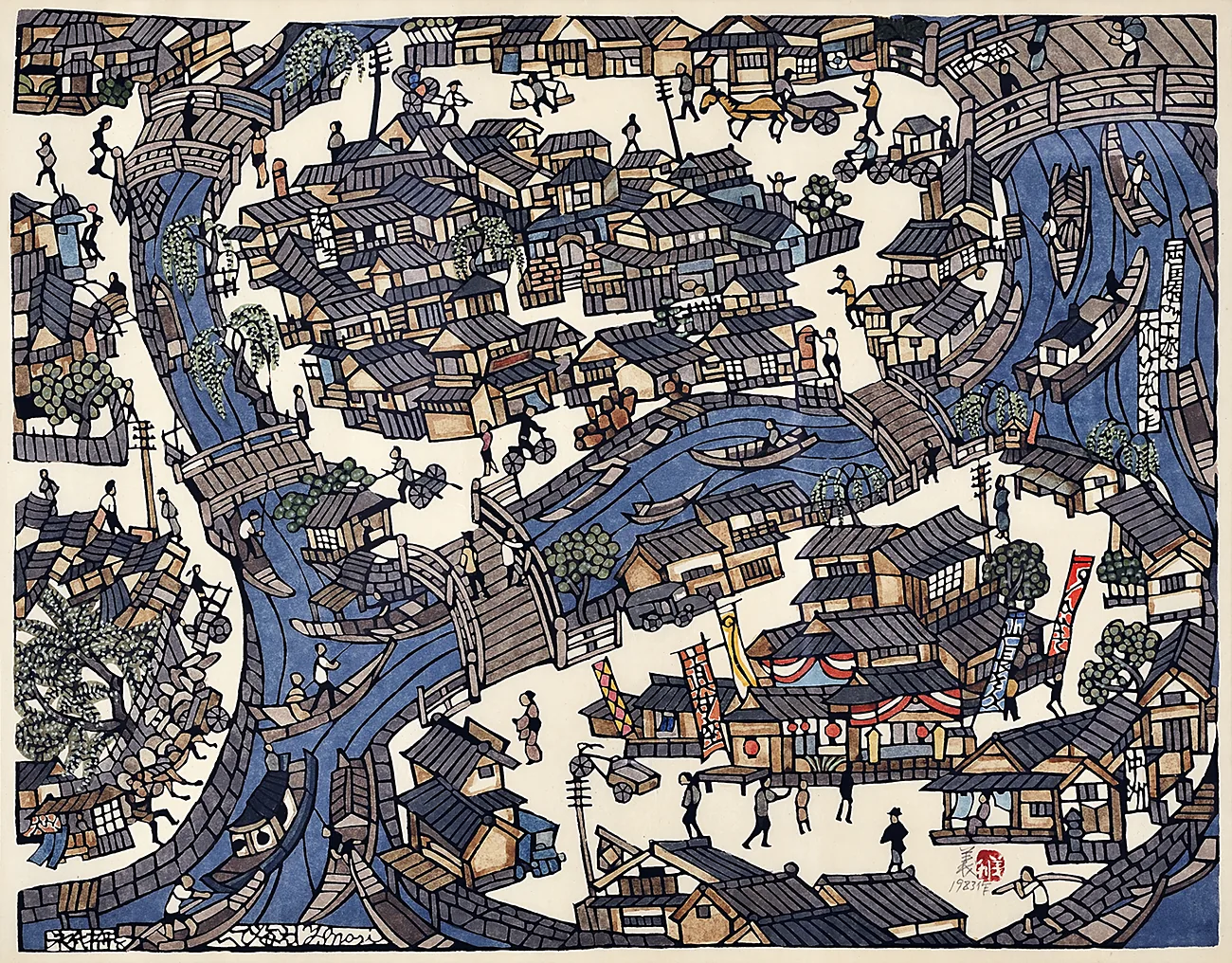
Map of Bygone Scenes of Shitamachi
少々昔の下町図絵|Shōshō Mukashi no Shitamachi Zue
Kappa-ban, 1983
72.0 × 91.0 cm
Exhibited at the 51st Japan Print Association Exhibition (第51回日本版画協会展)
Centered on Hamachō 3-chōme in Nihonbashi (日本橋浜町三丁目) in the mid-Taishō era, the work depicts Ryōgoku Bridge (両国橋) and the flow of the Ōkawa River (大川). It is a landscape the artist remembered from his youth.