Yoshitoshi Mori (1898–1992): The Artist Who Made Kappazuri a Fine Art Print
About Yoshitoshi Mori
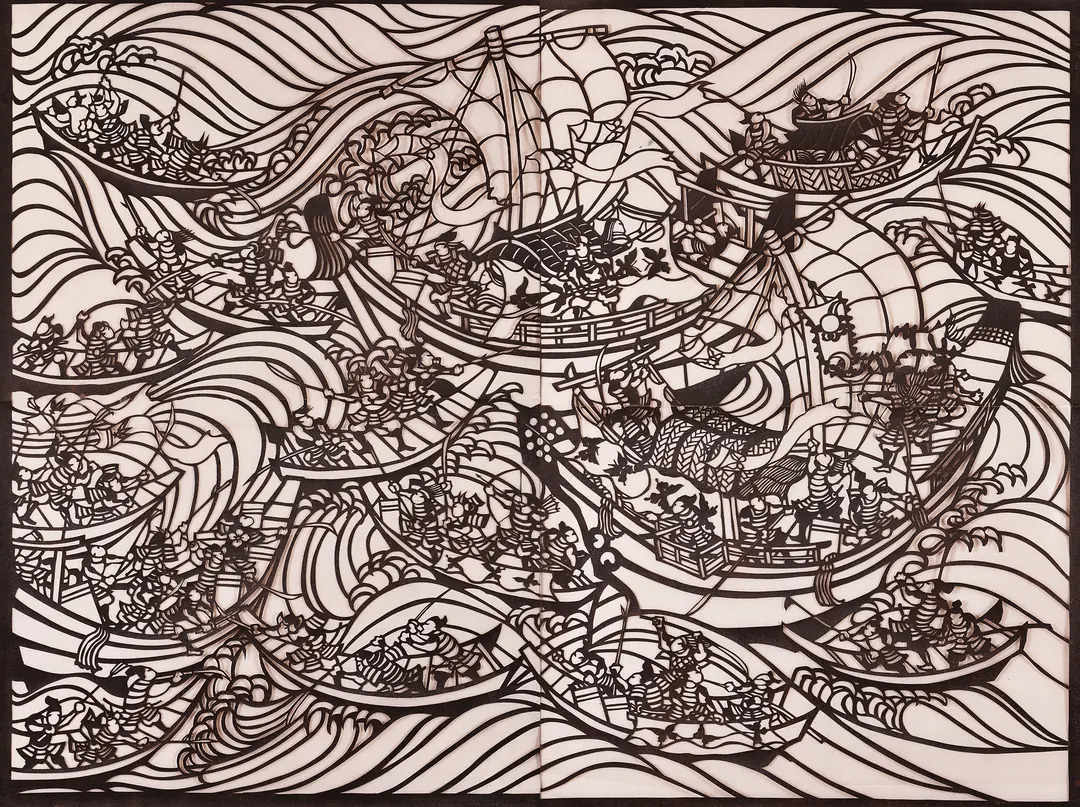
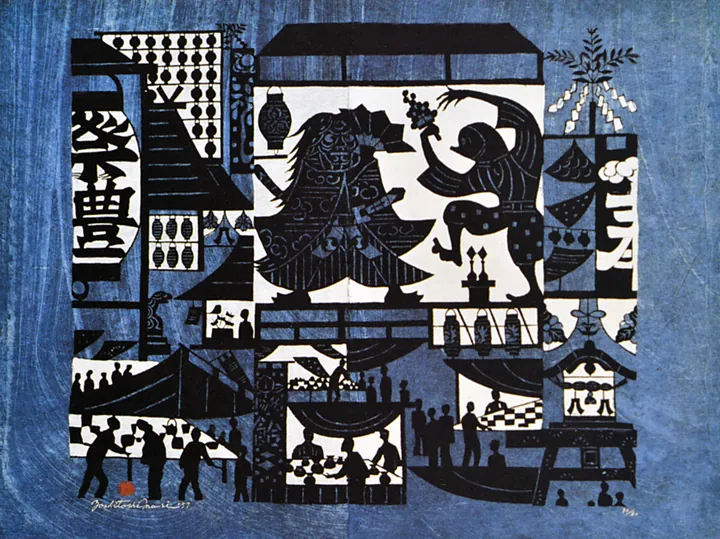
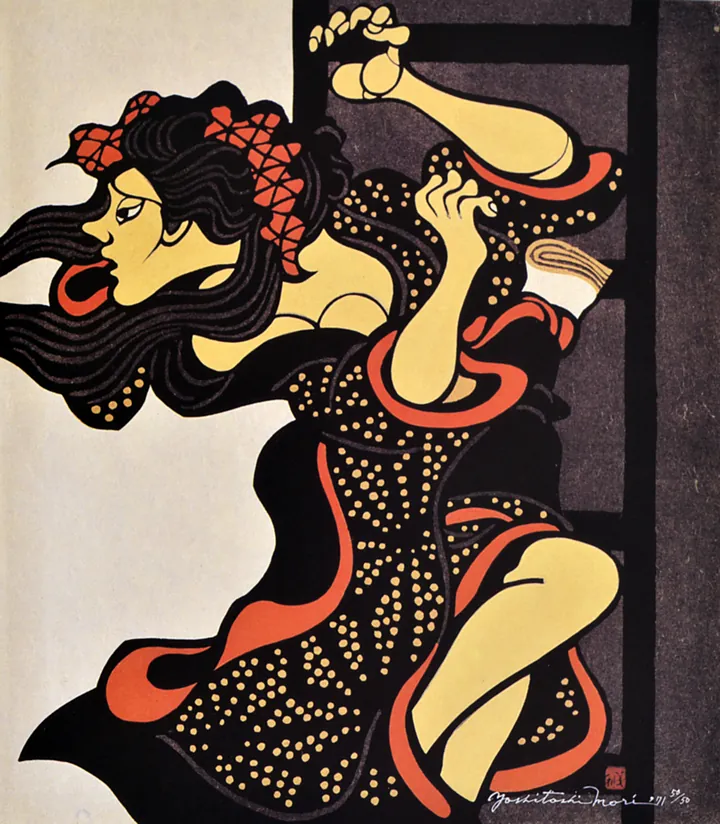
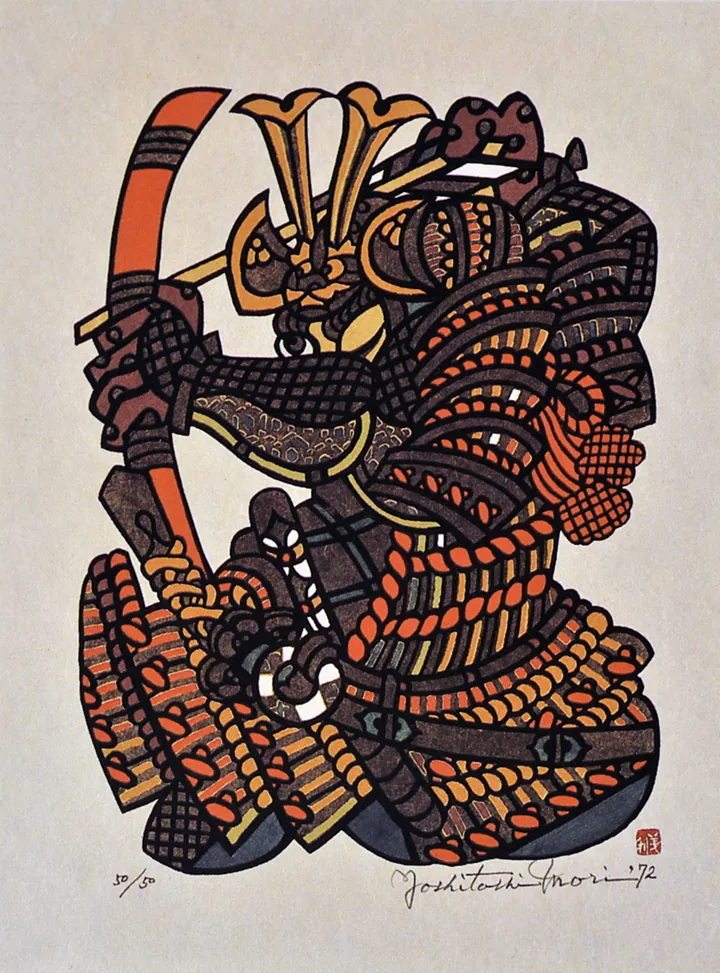
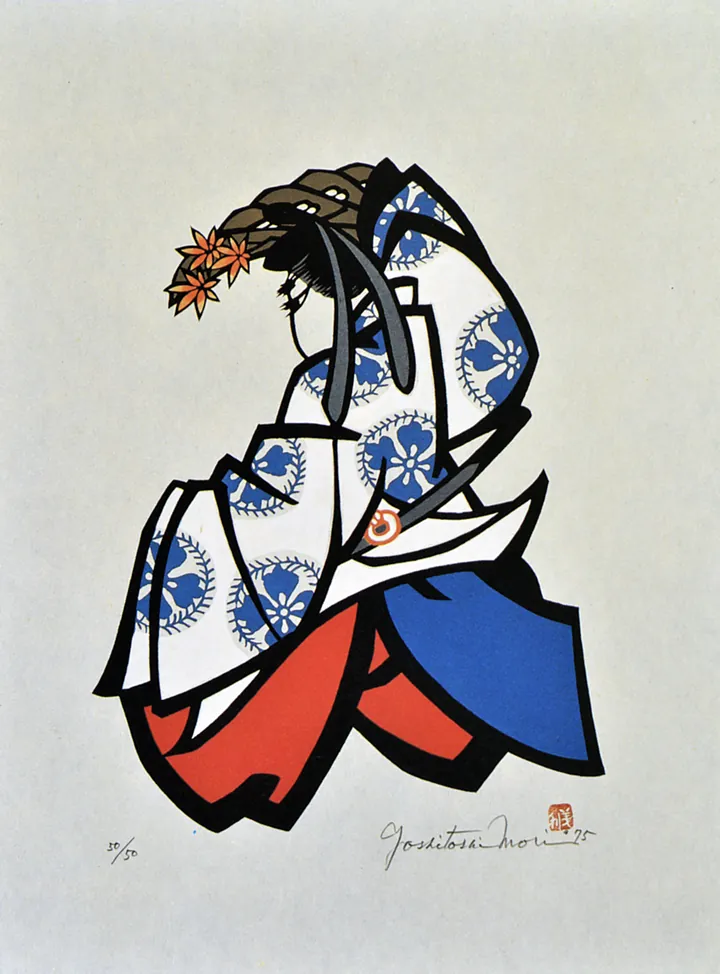
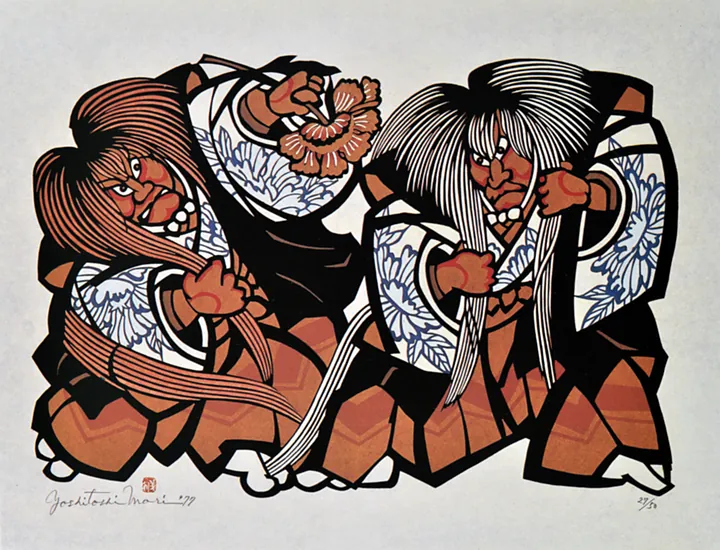
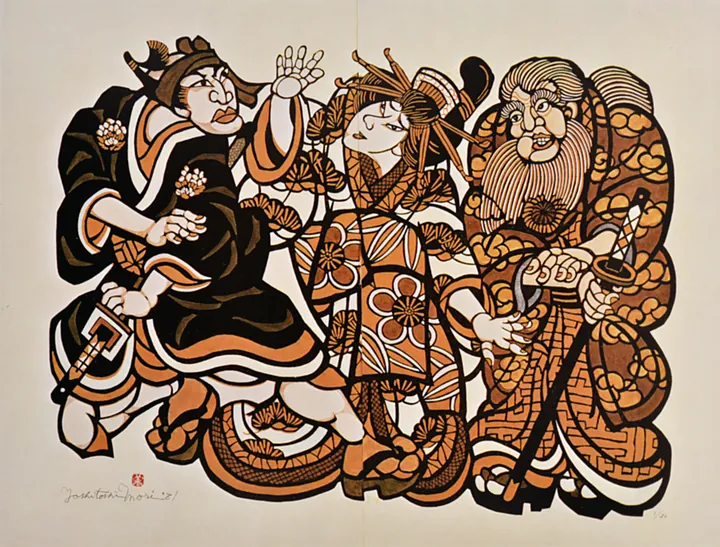
A leading Japanese printmaker who devised kappa-ban prints using the Kappazuri technique. His hallmark is a powerful style drawing on the scenes of Tokyo’s shitamachi, where he was born and raised, as well as kabuki, warrior deities and the Genpei War. Captivated by the dynamic sense of movement in his work, collectors in Japan and abroad still treasure many of his prints.
Kappazuri
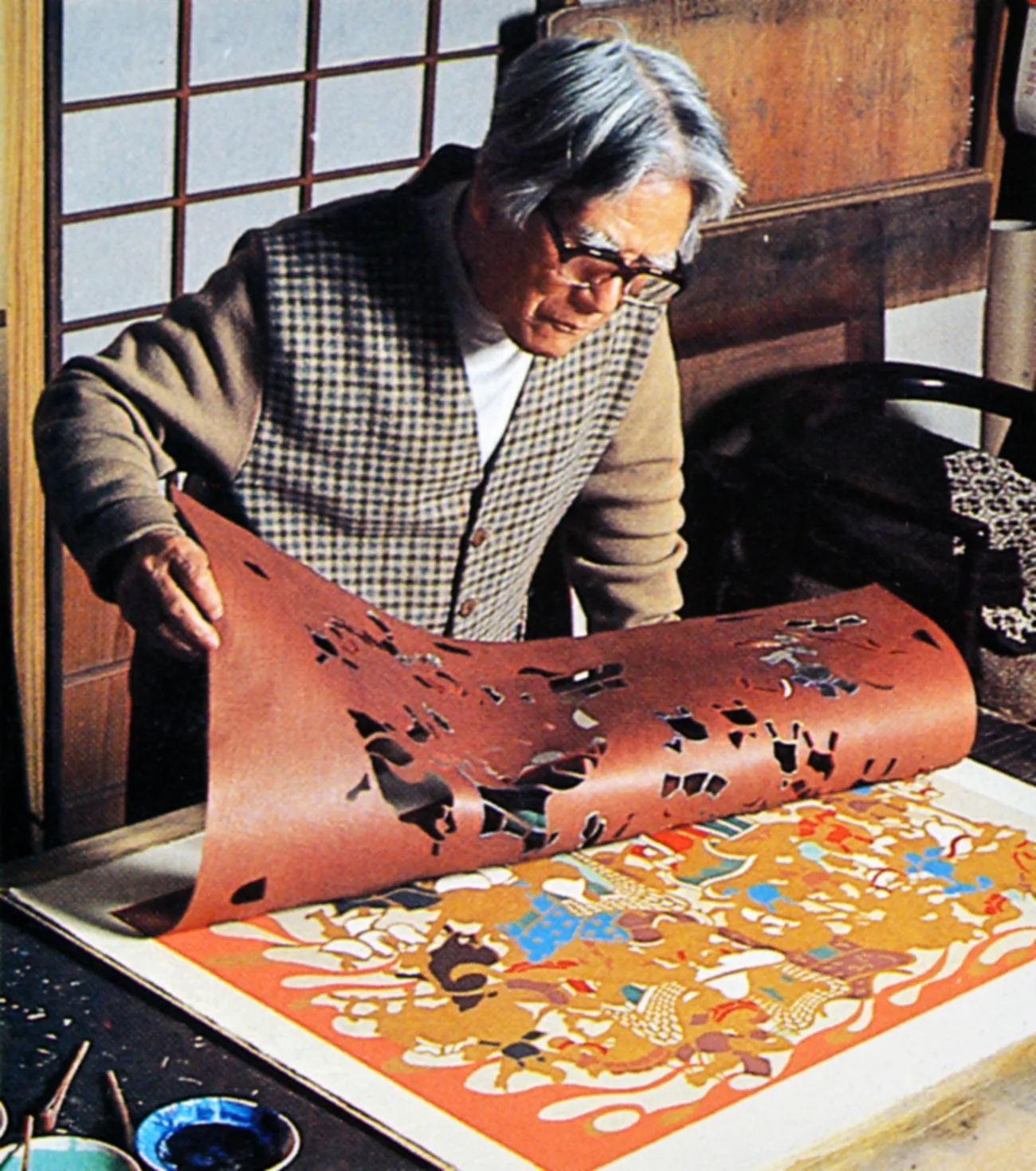
Most of Yoshitoshi Mori’s works were printed using a technique called Kappazuri. There is a special paper called “Kappagami” (literally means “raincoat paper”) that is made from laminated sheets of handmade paper glued with persimmon tannin. It is very strong, flexible and water proof. Kappazuri is a technique frequently used in “Honesenzuri” (literally means “skeleton print”), i.e., drawing a picture on Kappagami and finishing with hand-printed contour line using ink.
Taking a hint from dyeing, his own background, Yoshitoshi Mori used “Shibugami,” the paper common in Japanese dyeing, to develop his Kappazuri.
Works
Collections
- Japan
- The National Museum of Modern Art, Tokyo; Machida City Museum of Graphic Arts; Chuo Kuritsu Kyodo Shiryokan; Kurobe City Art Museum; and others
- Overseas
- The British Museum; The Museum of Modern Art, New York; Museum of Fine Arts, Boston; Philadelphia Museum of Art; The Art Institute of Chicago; and others